I was recently refactoring some legacy code, and I got to a particular class at one point. The class functionality looked familiar with familiar variable names, code structure and even typo in a log message, commented code and todo comments. Just the class name was different. Obvious code duplication.
Uncle Bob talks about cleaning up code in The Boy Scout Rule chapter:
“I don’t think this rule is too much to ask. You don’t have to make every module perfect before you check it in. You simply have to make it a little bit better than when you checked it out. Of course, this means that any code you add to a module must be clean.”
The author of the duplicated code clearly didn’t make any effort to leave the existing code in a cleaner state than he found it. He didn’t even make an effort to clean up the code he copied. This approach is precisely the way to end up with a legacy code no one wants to work with.
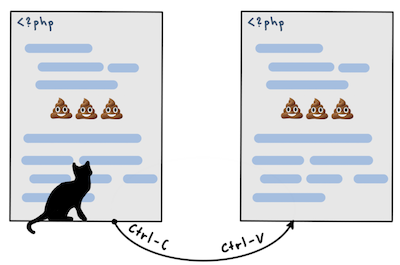
And being a good scout is so easy nowadays. We have a spectrum of possibilities at our disposal we can use in no time. I think the reason for not leaving the code in a better state is laziness, not the lack of tools.
What would a good scout do?
Good scout would:
- use class inheritance as both classes extend the same parent class to avoid extensive duplication
- remove dead code
- remove
@todocomments as they are not valid for last two years - fix typos
It wouldn’t take more than 5 minutes to do the changes, but the outcome would be much cleaner.
comments powered by Disqus